How to Reduce Frizz in Curly Hair — A Different Perspective
Frizz is one of the most common concerns I hear from curly-haired clients.
And almost always, the first solution offered is “use this product” or “try a stronger gel.”
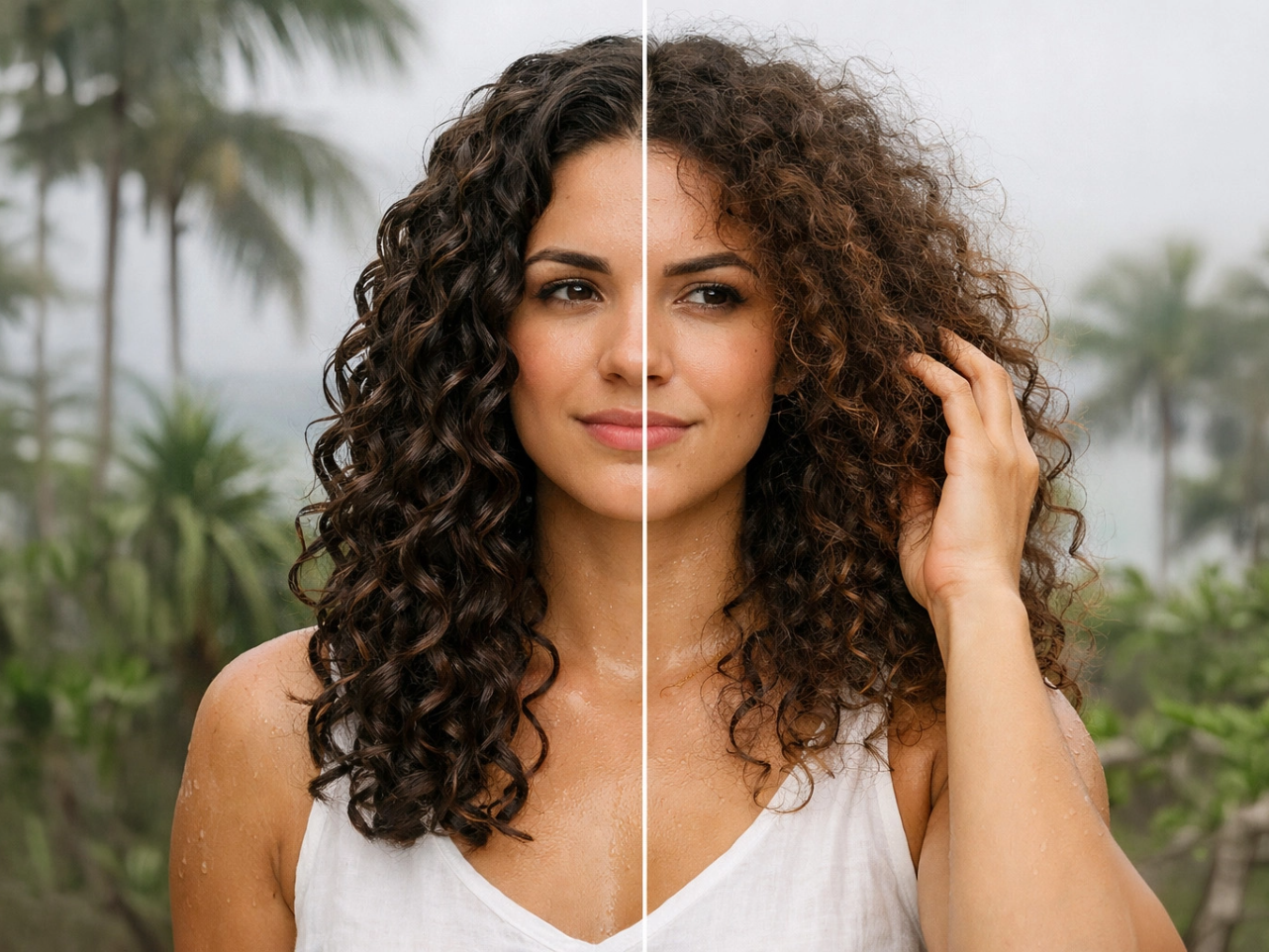
But frizz is not a styling failure! Frizz is a hydration issue!
To truly reduce frizz, we need to stop asking “What product should I use?” and start asking:
Why is my hair dehydrated in the first place?
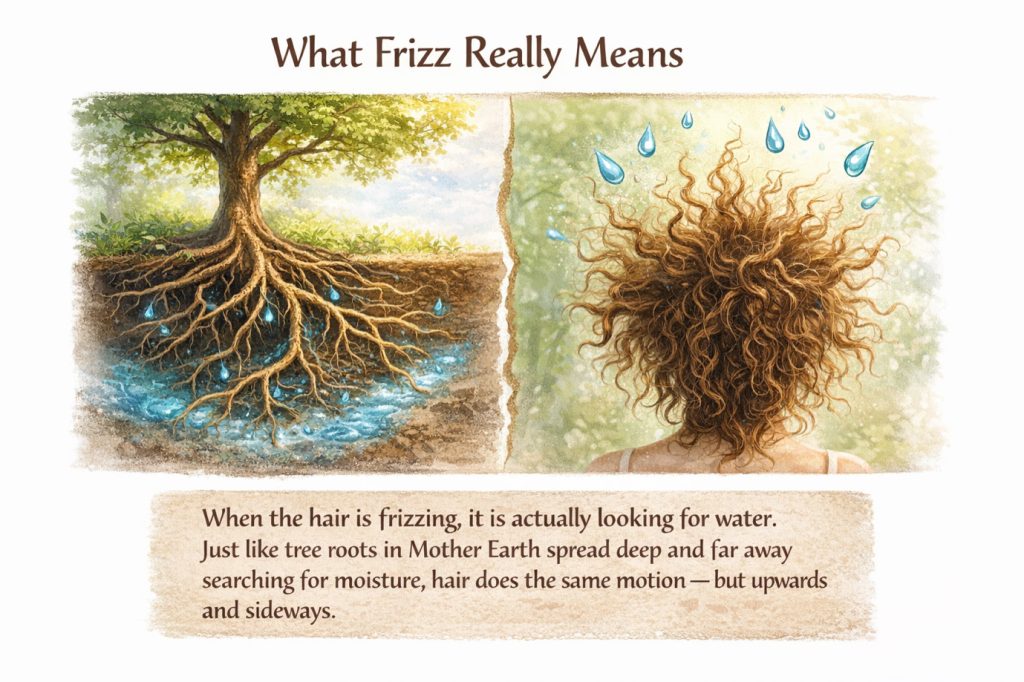
What frizz really means?
When hair is frizzing, it is actually looking for water.
In other words, frizz is communication. It is the hair telling us:
“I am dehydrated — and something is preventing me from absorbing or holding onto moisture.”
Understanding this changes how we approach frizz entirely. Instead of trying to control or mask it, we can begin addressing the real cause — restoring the hair’s ability to absorb and retain water — which is where true curl health begins.
When curly hair doesn’t contain enough water internally, it tries to pull moisture from the surrounding environment (especially humid air). This causes the cuticle to lift and the curl pattern to lose definition — what we see as frizz.
So the root problem isn’t necessarily lack of conditioner or gel. The root problem is dehydration.
How dehydration happens in curly hair
Dehydration can happen for two main reasons — and often, both are present at the same time.
1. The hair can’t absorb water properly
This happens when the hair cuticle becomes blocked or compacted.
Common causes include:
product build-up
mineral build-up from hard water
excess oils, silicones, or heavy butters
infrequent or ineffective cleansing
When the cuticle is blocked, water simply cannot enter the hair shaft properly, no matter how good the conditioner is.
Hydration can’t happen if water can’t get in.
If the cuticle is tightly closed or blocked, it is possible for hair hydration treatments to only hydrate the cuticle (outer layer) and fail to reach the cortex (inner layer). For long lasting hydration, the goal is to deliver water into the cortex of the hair, which is like a sponge, able to hold onto water for longer period of time.
2. The hair can’t hold onto water
Even if water does enter the hair, damaged hair often cannot retain it.
Damage weakens the internal structure of the hair shaft, allowing moisture to escape too quickly.
Damage can be caused by:
natural aging
chemical services (colouring, lightening, chemical straightening)
heat styling (flat irons, curling irons)
environmental exposure (UV from the sun)
repeated hot water exposure (very hot showers)
A simple way to understand damaged hair
I often describe damaged hair like this: imagine a drinking straw or garden hose that’s been punctured with hundreds of tiny holes. You can pour water into it —but it won’t stay there for long. That’s exactly how damaged hair behaves.
No matter how beautiful the conditioner or styling gel is, the water escapes too quickly. The hair feels dry again, and frizz returns.
Why products alone don’t fix frizz
This is the part many people don’t realise:
If the hair:
can’t absorb water
or can’t retain water
then product performance becomes irrelevant. Conditioners and gels don’t create hydration on their own —they support hydration once the hair is capable of receiving and holding water.
This is why someone can use “the best curl products” and still struggle with frizz.
The correct order for reducing frizz
To truly reduce frizz, hydration must be approached in the correct sequence:
1. Cleanse effectively
Remove build-up so water can actually enter the hair.
2. Repair before moisturising
Strengthen and repair the hair shaft so moisture has something to stay in.
3. Hydrate deeply
Once the hair can absorb and retain water, hydration treatments become effective.
4. Seal and style
Now — and only now — styling products like creams and gels can do their job properly.
Frizz is not the enemy
Frizz isn’t something to fight or control aggressively.
It’s information.
It’s your hair telling you: “I’m dehydrated — and something is preventing me from holding onto moisture.”
When we listen to that message instead of masking it, curls become:
softer
more defined
more predictable
longer-lasting between wash days
A more thoughtful approach to curly hair
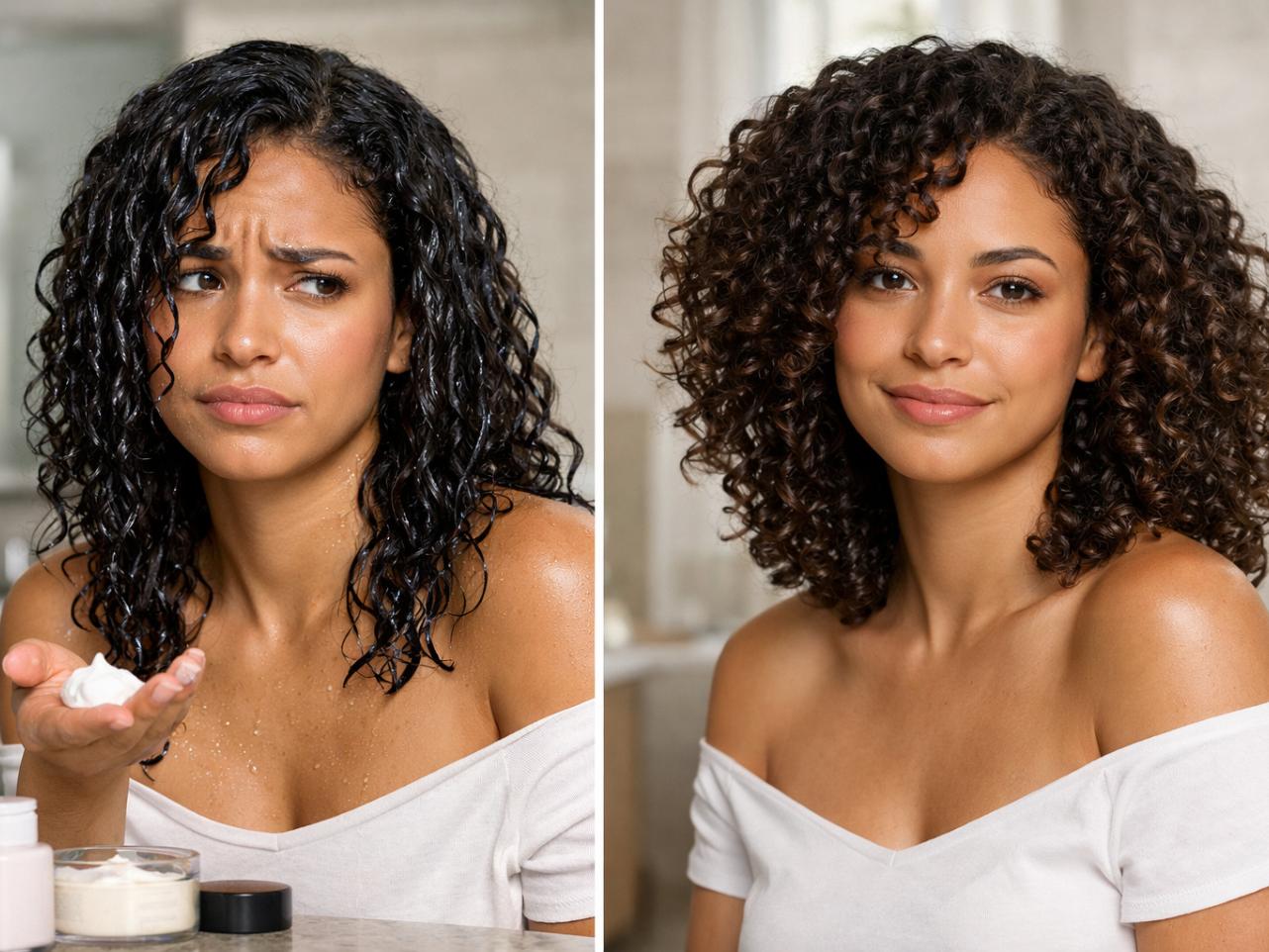
Reducing frizz isn’t about finding a miracle product. It’s about understanding what’s happening inside the hair. When hydration is restored properly — through cleansing, repair, and moisture — frizz naturally reduces as a result, not a battle.
Healthy curls don’t need to be forced into submission. They simply need the right conditions to thrive.
Our philosophy
In our salon, we always assess:
hydration levels
damage history
porosity and cuticle behaviour
lifestyle and environmental factors
Because frizz-free curls don’t come from trends — they come from knowledge, care, and intention.
We’d love to be part of your special day. Complete the form below and we’ll be in touch within 48 hours with availability and further details.
Enquire About Your Child’s Curl Appointment
We’re so excited to welcome your little curly 🤍 Please share a few details below and we’ll be in touch within 48 hours with availability and next steps.
Curly Hair Education — Coming Soon!
Be the first to hear when our education launches 🤍 Designed for hairdressers ready to feel confident working with natural curls!
Education Waitlist Form
Be the first to hear when our education launches Designed for hairdressers ready to feel confident working with natural curls!
Enquire About Your Curl Appointment
We’re so excited to welcome you.
Please share a few details below and we’ll be in touch within 48 hours with availability and next steps.