Silk vs Satin Pillowcases: Which Is Better for Curly Hair, Skin & Frizz-Free Beauty Sleep?
If you often wake up with frizzy, tangled curls or sleep creases on your skin, your pillowcase could be the culprit. The fabric you sleep on plays a bigger role in hair health, skin clarity, and overall comfort than most people realise.
Silk and satin pillowcases are popular alternatives to cotton—but which one truly delivers the best results? Let’s break down the benefits, the differences, and how to choose the right one for you.
Why Cotton Can Damage Curls and Skin
Traditional cotton pillowcases are highly absorbent and create friction against your hair and skin while you sleep. This can lead to:
- Frizz and tangled curls
- Moisture loss and dryness
- Hair breakage
- Sleep lines and skin irritation
For curly hair especially, friction and moisture loss are major concerns. That’s where silk and satin come in.
The Benefits of Silk and Satin for Curly Hair
1. Reduced Friction = Less Frizz
Both silk and satin have smooth surfaces that allow hair to glide instead of snagging.
- Minimises friction so curls stay smooth and defined
- Reduces tangles overnight
- Helps maintain curl shape for longer
Less friction means less frizz—so you wake up with more defined, manageable curls that only need a quick refresh.
2. Better Moisture Retention
Curly hair thrives on hydration. Unlike cotton, silk and satin are far less absorbent.
- Help keep natural oils in your hair
- Prevent dryness and brittleness
- Maintain softness and shine
By locking in moisture, your curls remain healthier between wash days.
3. Reduced Breakage and Damage
Curly hair is naturally more delicate and prone to breakage.
- Smooth surfaces reduce tugging and pulling
- Less strain on individual strands
- Longer-lasting curl definition
The result? Stronger curls that maintain their bounce and shape.
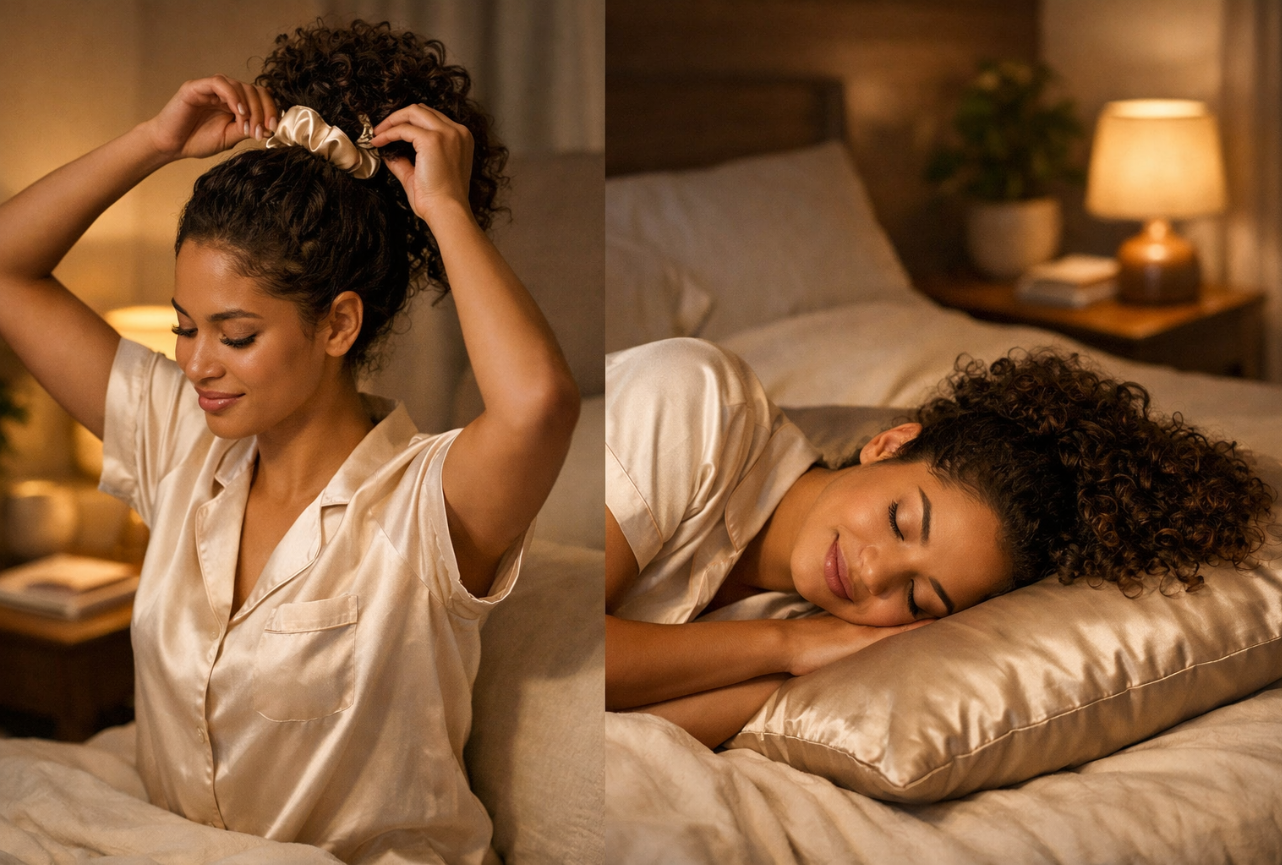
Pro tip: For extra protection, wear your hair in a loose high “pineapple” ponytail or bun using a silk scrunchie while you sleep.
Silk vs Satin: What’s the Real Difference?
Although they look similar, silk and satin are not the same.
Silk: A Natural Luxury Fibre
Silk is a natural protein fibre produced by silkworms and has been prized since ancient China. It is breathable, durable, and naturally hypoallergenic.
Key benefits of silk:
- Naturally smooth and breathable
- Hypoallergenic
- Helps regulate temperature
- Superior moisture retention
- Excellent for sensitive skin
Silk is generally more expensive—but its natural properties make it a premium choice for hair and skin health.
Satin: A Weave, Not a Fibre
Here’s an important distinction: satin refers to a weaving technique, not a material. Satin pillowcases are usually made from synthetic fibres like polyester or rayon, unless specifically labelled “silk satin.”
Benefits of satin:
- Smooth texture
- Reduces some friction
- More affordable
However, synthetic satin is typically:
- Less breathable
- Not naturally hypoallergenic
- Less effective at locking in moisture
- More likely to trap heat
While satin offers some improvement over cotton, it doesn’t provide all the skin and hair benefits of pure silk.
So, Which One Wins?
If you’re looking for the best results for curls, skin, and overall sleep quality:
- Best overall performance: Silk
- Budget-friendly alternative: Satin
- Best for sensitive skin and long-term hair health: Silk
While satin is a step up from cotton, silk offers superior moisture retention, breathability, and natural benefits that make it worth the investment.
Transform Your Hair and Skin While You Sleep
Switching to a silk pillowcase is one of the simplest upgrades you can make to your beauty routine. With less friction, better hydration, and reduced breakage, you’ll wake up with smoother curls, healthier strands, and happier skin.
Don’t let another night cause frizz and breakage — Shop our silk pillowcases now and wake up to smoother, frizz-free curls tomorrow.